
GENOMIC ATLAS OF THE ORIGINS OF GREAT APE TRAFFICKING




Forensic genomics for the creation of the first Atlas of sources of illegal trafficking in great apes
The Comparative Genomics Lab
Based in the Universitat Pompeu Fabra (Barcelona), our lab uses non-invasive sampling of rescued great apes to determine their geographic origins. By identifying the regions from which each individual was taken, this work helps reconstruct capture hotspots, reinforcing evidence on the origins of illegally captured apes. These genetic data contribute to the systematic documentation of ape trafficking, support international databases such as the GRASP Ape Seizures Database, and provide a robust scientific foundation for conservation strategies, law enforcement efforts, and policy recommendations aimed at combating the illegal wildlife trade.
The Problem
Thousands of great apes are illegally captured and traded every year across Africa and Asia, driven by bushmeat hunting, the pet trade, and expanding human activities. This trafficking, both international and domestic, poses a severe threat to the survival of already endangered species.
Despite its scale, the true magnitude and driving forces behind great ape trafficking remain poorly understood. Closing this knowledge gap is essential to designing effective conservation policies and enforcement strategies.
A critical step is identifying where confiscated apes and bushmeat originate in order to enable a reliable tracing of ape origins and trafficking routes and providing the scientific evidence needed to combat illegal trade.
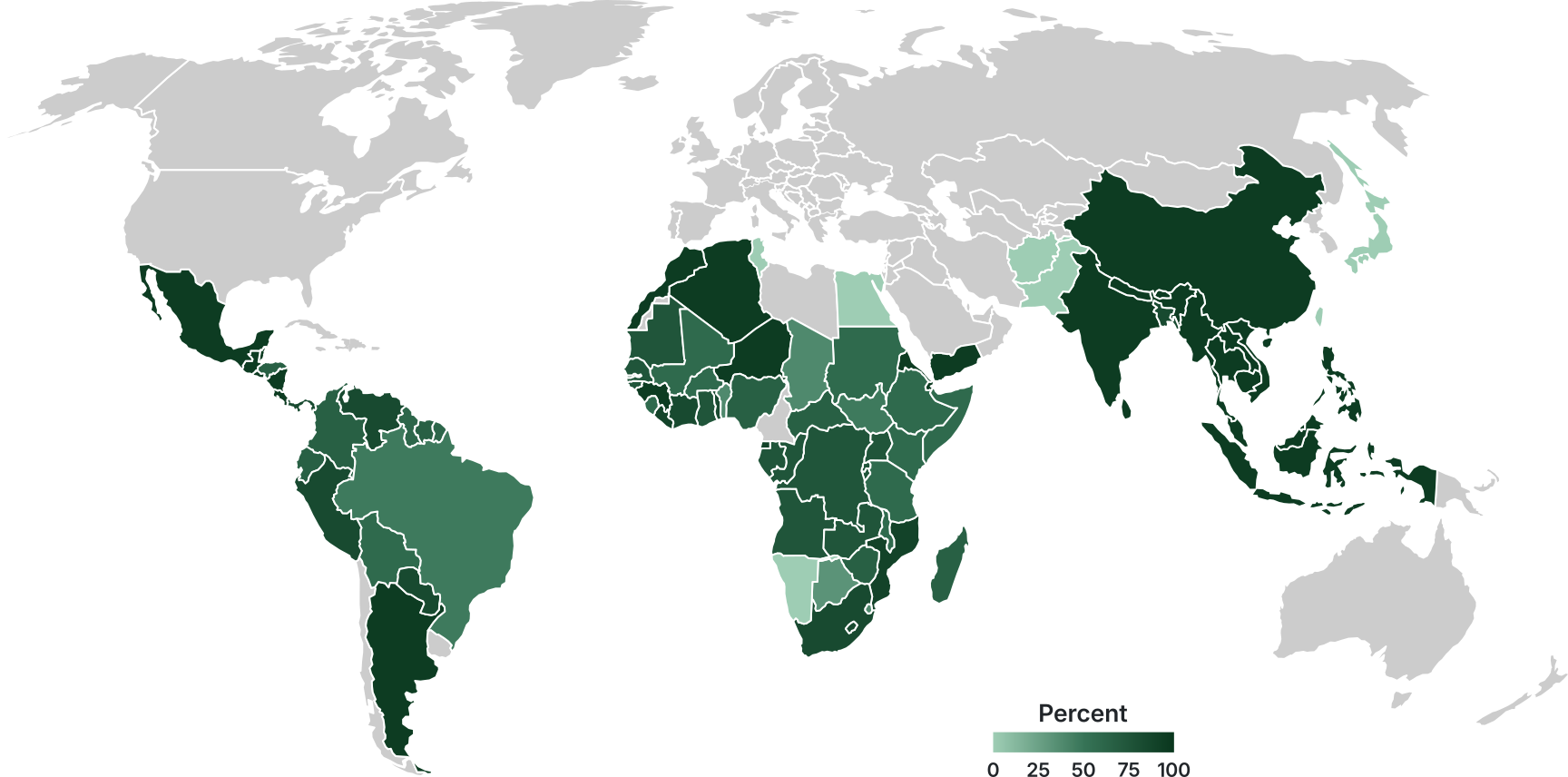
Percentage of primates categorized as "Hunting and Trapping" by the IUCN across each primate range country. Figure adapted from Figure 1. in Garber et al., Frontiers in Conservation Science 2024.
The Solution
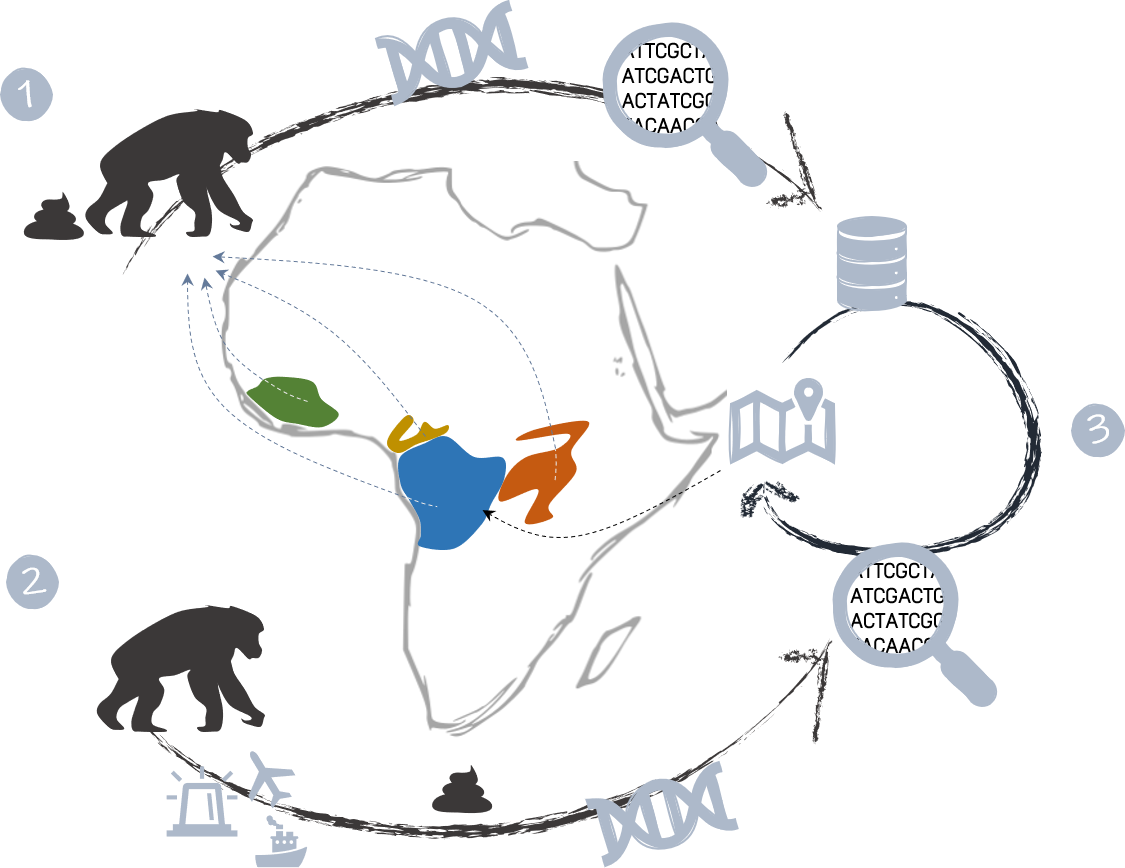
Non-invasive samples from confiscated apes (2) are assigned to a greographic location through a bioinformatic analysis (3) using our reference database of samples with a known origin (1).
The Comparative Genomics Group, led by Tomàs Marquès-Bonet and collaborating with GRASP and PASA, has developed a groundbreaking genetic approach to trace the origins of illegally trafficked great apes.
Using non-invasive genomic data, this method determines the geographic origin of confiscated apes with high precision (Fontsere et al. Cell Genomics 2022). Validated in a proof-of-concept study, it is now fully operational and being implemented at scale with samples from African sanctuaries.
The system provides accurate geographic assignments, often pinpointing specific protected areas. Preliminary results already reveal clear extraction hotspots, providing the first genetic evidence of where trafficked apes are most frequently captured.
Our long-term goal
We aim to create the first genetics-based atlas of great ape trafficking sources, integrated with the UN-GRASP Ape Seizures Database. By combining genetic evidence with social and economic data, this initiative will provide actionable insights to support law enforcement, inform policy, and ultimately disrupt the illegal trade in great apes.