Involved institutions


In collaboration with Universitat Pompeu Fabra, Revive & Restore, Zoo Barcelona, GRASP and PASA
Us
The Comparative Genomics Lab
The Comparative Genomics Laboratory, based at Universitat Pompeu Fabra (UPF) in Barcelona, is led by Prof. Tomàs Marquès-Bonet, an internationally recognized leader and key opinion figure in the field of ape and primate genomics.
Our research focuses on understanding the genetic, regulatory, and epigenetic mechanisms that underlie phenotypic diversity in humans and non-human primates, with a strong emphasis on a comparative genomic perspective. By leveraging evolutionary comparisons across primate lineages, we aim to identify the genomic changes that are uniquely associated with specific traits, adaptations, and evolutionary innovations.
Through the integration of genome variation, gene expression, and epigenetic datasets, we seek to construct a comprehensive view of genome evolution. This integrative approach allows us to investigate how changes in genomic structure, allele frequency, and regulatory organization have contributed to key evolutionary transitions in our recent past. Ultimately, our work provides fundamental insights into primate evolution and offers a deeper understanding of the genomic basis of what makes us human.
Funding
Revive & Restore Foundation
The Revive & Restore Foundation has played a foundational role in the launch of the Origin Trafficking project. Its early and strategic support was essential to initiate and operationalize the project, transforming a scientific concept into an active, functioning conservation effort.
With the support of Revive & Restore, we have established formal partnerships with multiple African sanctuaries, processed hundreds of samples, and begun building the largest reference database of geolocalized great ape genomes to date. This growing resource allows us to continuously improve the precision of origin mapping and provides a robust scientific foundation for conservation action, law enforcement, and policy development.
Looking ahead, the long-term success of this genomic conservation initiative depends on expanding these efforts through new partnerships and additional funding from foundations, institutions, and stakeholders committed to biodiversity protection. Continued support will allow us to scale the methodology, extend it across ape-range countries, and ensure that cutting-edge genomic science becomes a lasting, practical tool to combat illegal trafficking and safeguard great apes for future generations.
PASA
Pan African Sanctuary Alliance
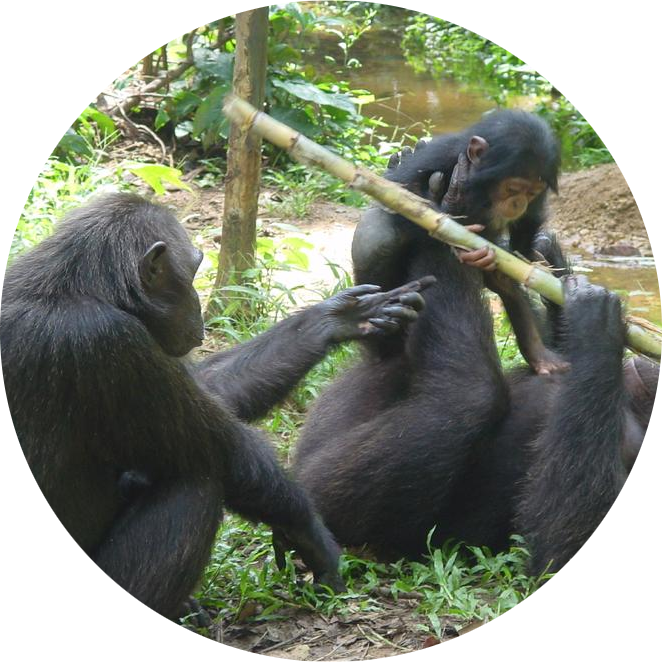
The Pan African Sanctuary Alliance (PASA) is a leading network of African wildlife sanctuaries dedicated to the rescue, rehabilitation, and long-term care of orphaned and confiscated great apes. PASA members are often the first responders when apes are seized from illegal trade networks, providing immediate care and safe refuge for animals that would otherwise face death or prolonged suffering. These sanctuaries not only support the physical recovery of rescued apes but also offer a controlled environment for long-term rehabilitation, socialization, and eventual reintroduction where appropriate.
Beyond direct animal care, PASA plays a critical role in broader conservation efforts. The alliance supports law enforcement by providing expert testimony, sharing data on trafficking incidents, and helping coordinate rescue operations. PASA also strengthens local capacity through training, knowledge exchange, and the development of standardized best practices for sanctuary management and animal welfare. Importantly, PASA members generate essential on-the-ground knowledge about the origins, routes, and drivers of trafficking, making them invaluable partners in mapping illegal trade patterns and understanding its impact on wild populations across the continent.
GRASP
Great Apes Survival Partnership
The Great Apes Survival Partnership (GRASP) is a unique international alliance led by the UN Environment Programme and UNESCO, bringing together governments, conservation organizations, scientists, and local communities to secure the long-term survival of great apes and their habitats. GRASP serves as a global coordination platform that aligns conservation efforts across range states and supports the implementation of international commitments for great ape protection. Through strategic partnerships, GRASP helps address the most urgent threats to great apes, including habitat destruction, poaching, and the illegal wildlife trade.
A key strength of GRASP is its ability to translate scientific and field-based evidence into practical policy and enforcement actions. The partnership manages essential global resources such as the Ape Seizures Database, which documents trafficking incidents and provides critical data for monitoring trends and identifying trafficking hotspots. By collaborating with organizations like the UN Office on Drugs and Crime (UNODC) and working directly with governments and NGOs, GRASP ensures that evidence from projects like the Comparative Genomics Lab is integrated into national and regional strategies. This includes supporting law enforcement operations, informing policy decisions, and strengthening global responses to trafficking, ultimately helping to protect great apes at scale through coordinated international action.