
Our method



Genetically determining the geographic origin of great ape with non-invasive fecal sampling
Our pipeline
1.
Collection and Documentation

We collect non-invasive samples, faeces and hair, from rescued or confiscated great apes through our sanctuary partners. This approach ensures no additional stress or harm to animals already in vulnerable situations.
Each sample is carefully documented and handled in full compliance with applicable legal and ethical standards, maintaining a traceable chain of custody from field to laboratory.
2.
Field DNA Extraction

Using portable laboratory kits, local teams extract DNA directly on-site, bypassing the cost and logistical complexity of centralised laboratories and cold-chain transport. This dramatically lowers the barrier to entry for partner organisations in range countries.
The extraction protocol is optimized for low-quality and degraded DNA typical of hair and faecal material, maximising yield and reliability under field conditions.
3.
Illumina Sequencing

DNA sequencing is performed in the laboratory using Illumina short-read sequencing platforms, generating high-quality, high-resolution genomic data.
Targeted sequencing of chromosome 21 is achieved through standardized library preparation and hybridization-based capture strategies, producing robust datasets suitable for accurate variant detection, downstream genomic analyses and geographic assignment.
4.
Automated Analysis & Geographic Assignment

Sequencing data are processed through automated bioinformatic pipelines that generate individual genetic profiles. Each profile is then compared against our continuously growing reference database, built from samples of known geographic origin across the great ape range.
This comparison allows us to infer the most likely geographic origin for each sample, often down to specific regions or protected areas.
5.
Actionable Conservation Results
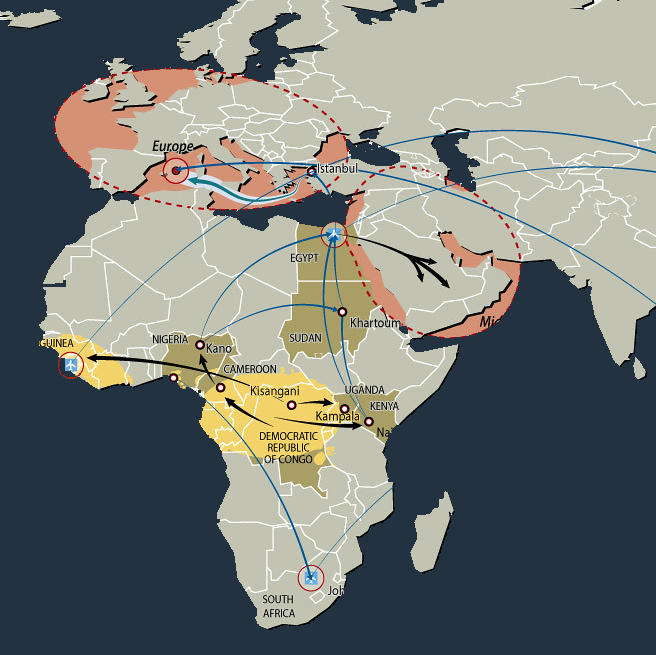
The inferred origins expose the structure of illegal trafficking networks. Identifying where animals were taken from reveals trafficking hotspots and routes.
These results provide evidence for law enforcement and conservation planning, transforming genomic science into a practical tool that directly supports the fight against illegal great ape trafficking.